TPMS tire pressure monitor systems help drivers keep track of tire health, detect slow leaks, and prevent unexpected flats. This guide highlights five reliable options, covering wireless external sensors, color displays, solar charging, and OEM-style compatibility. Each product section includes a quick overview, key features, and practical considerations to help American drivers choose a system that matches their vehicle type and driving needs.
Summary of chosen products:
- Tymate TM7 Tire Pressure Monitoring System — Wireless 4 external sensors, color display, multiple alarm modes
- Tymate TM2 RV Tire Pressure Monitoring System — 4 sensors, solar charging, color LCD, versatile power options
- 433Mhz TPMS Sensor — GM-compatible four-pack for Chevrolet, Buick, GMC, Cadillac vehicles
- TPMS Sensors 315MHz — Ford and Lincoln compatible 4-pack for several model years
- Autel TPMS Sensor 2in1 MX Sensor — Universal rubber-bodied sensors with broad compatibility
Tymate TM7: Wireless TPMS With External Sensors

Product overview: The TM7 uses four external sensors and a color display to show tire pressure in real time. It supports multiple alarm modes and is designed for installation on RVs, SUVs, MPVs, trucks, and sedans. The system emphasizes ease of use and clear alerts to help drivers respond quickly to changing tire conditions.
Tymate TM2 RV Tire Pressure Monitoring System

Product overview: The TM2 is tailored for RV users with solar charging and a color LCD display. It includes four sensors that monitor tire pressure and temperature, with alarm modes covering leaks, high/low pressures, and signal issues. The system emphasizes battery efficiency, long sensor life, and factory pre‑pairing for quick setup.
GM-Compatible 433MHz TPMS Sensor For Chev/GMC/Buick/Cadillac

Product overview: This GM‑specific 433MHz TPMS sensor pack provides four replacements compatible with several GM models, such as Chevy Malibu, Silverado, Impala, Cruze, Buick Regal Lacrosse, and more. It’s designed to replace factory sensors and maintain proper TPMS function across generations, offering a practical option for owners needing to refresh worn or failed sensors.
Ford/F-Series 315MHz TPMS Sensor Pack

Product overview: This 315MHz TPMS sensor pack targets Ford, Lincoln, and related models, with a 4-pack option designed to replace aging sensors. It provides a practical path to restore reliable tire pressure monitoring across compatible vehicles, supporting straightforward installation and dependable readings.
Autel MX Sensor Universal 2in1
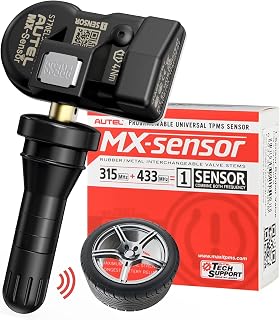
Product overview: The Autel MX Sensor provides a universal 2in1 design in rubber, compatible with many vehicle makes and ECU configurations. It is suitable for professionals and DIY enthusiasts who need flexible programming options for TPMS replacements, and it supports a wide range of vehicle models when paired with compatible toolsets.
Buying Guide: Key Purchase Considerations
- Sensor type and installation: External, universal, or OEM-style sensors affect ease of installation, durability, and compatibility with your vehicle. External sensors are usually easier to install on RVs and trucks.
- Frequency compatibility: TPMS sensors operate on 315 MHz or 433 MHz frequencies. Verify your vehicle’s system frequency and ensure the sensor pack matches to avoid compatibility issues.
- Display and alarms: Look for a bright display, multiple alarm modes, and clear visual/audible alerts. Color LCD displays can simplify monitoring while driving.
- Power options: Solar charging is convenient for RVs and long trips, but ensure a reliable backup method such as USB or vehicle power if sunlight is limited.
- Battery life and sensor durability: Long-lasting batteries (months to years) and IP-rated waterproof sensors (IP67 or higher) reduce maintenance and corrosion risks.
- Calibration and setup: Some systems require factory pre-pairing of sensors, while others allow quick self-pairing. Pre-labeled sensors simplify installation.
- Alarm thresholds: Systems that let you customize high/low pressure thresholds and temperature alerts help tailor monitoring to your driving conditions and load.
- Vehicle compatibility: Check model-year ranges and OEM compatibility lists for each sensor to ensure it fits your car, truck, or SUV.
- Display location: If you prefer dashboard visibility, a monitor with an adjustable mounting position and a legible display reduces distraction while driving.
- Warranty and support: A solid warranty and accessible customer support can be valuable if sensors fail or require replacement.