Protect engine components and intake systems from radiant heat with high-performance heat shield wraps. This guide highlights five top products designed to reflect and insulate against high temperatures, helping maintain performance and longevity of automotive parts. Each option offers distinct materials, thickness, and temperature ratings to suit different installation needs and environments.
Summary Table of Chosen Products (key specs by product):
| Product | Material | Max Temp | Backing | |
|---|---|---|---|---|
| Adhesive Backed Tape Roll (Gold) | Glass Fiber + Aluminum | 660°F | Adhesive Backed | 29.5 ft roll |
| Reflect-A-Gold Tape | Metalized Polyimide Glass Cloth | 800°F | Adhesive Backed | 2 in x 15 ft |
| Titanium Pipe Shield | Titanium outer / Silica fabric | 1350°F | Brackets & Clamps | 6 in x 12 in |
| Sporacingrts Adhesive Tape | Glass Fiber | — | Adhesive Backed | 2 in x 29.5 ft |
| 12×48 Gold Adhesive Wrap | Fiberglass with Gold Reflective Surface | Up to 2000°F | Adhesive Backed | 12 in x 48 in |
Adhesive Backed Gold Heat Shield Tape Roll

This wrap uses a glass fiber inner layer with an aluminum-alloy outer surface, delivering moisture resistance, fire protection, and corrosion resistance. It is designed to shield wires, brake lines, engine covers, and other areas that experience radiant heat. The material can handle continuous temperatures up to 660°F, reducing heat transfer to painted surfaces and nearby components.
Ideal uses include engine bays, intake piping, firewalls, and associated heat-prone zones. The self-adhesive backing simplifies installation, though surface prep is important for maximum adhesion and longevity. This option balances cost with effective heat management for standard automotive applications.
Design Engineering Reflect-A-Gold High-Temp Tape

Reflect-A-Gold combines a metalized polyimide laminated glass cloth with a high-temp adhesive, engineered to address heat soak around air boxes, seats, firewalls, and intake systems. It withstands continuous heat up to 800°F, with adhesive protection rated up to 325°F. The product is available in multiple widths (including 1.5″ and 2″), allowing precise tailoring to curved or flat surfaces.
The tape is designed to maximize engine performance by maintaining cooler intake and surrounding components. It works well for fuel cells, engine covers, bulkheads, and other areas needing reliable heat protection. Installation requires careful surface prep and potential trimming for a precise fit around complex shapes.
Titanium Pipe Shield With Two-Layer Design
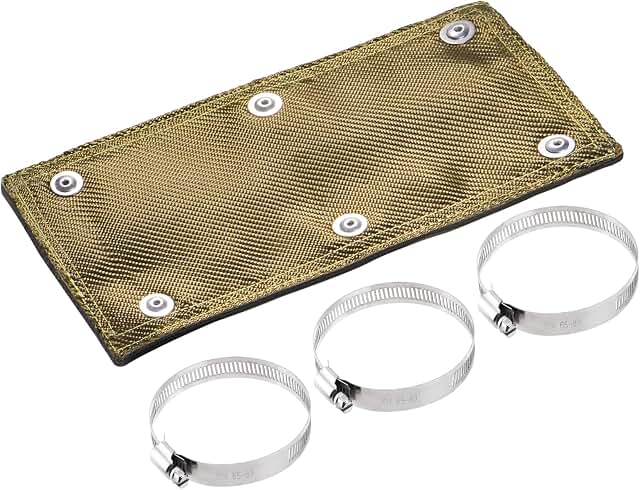
This shield features a two-layer material design with an outer titanium layer and inner silica fabric, delivering heat protection up to 1350°F. It is particularly suited for protecting heat-sensitive components, hoses, lines, and electrical wiring near exhaust and high-heat regions. Easy installation is supported by rivet-based standoff brackets and pipe clamps, enabling a secure fit even on irregular ductwork.
With its robust heat tolerance and thoughtful mounting system, this option is ideal for high-heat exhaust paths or engine bays where space allows a shield with an air gap to maximize cooling. It is well-suited for aftermarket exhaust components and other critical heat zones where reliability matters.
Sporacingrts Gold Adhesive Heat Shield Tape Roll

Made from high-quality glass fiber, this tape is oriented for areas like firewalls, hoods, hoses, and other zones where radiant heat must be controlled. It carries a self-adhesive backing for straightforward installation. The design emphasizes ease of use while delivering reliable heat reflection and barrier properties for automotive and some home applications.
The product guidance notes that it should not be used on exhaust pipes, highlighting the importance of selecting the right material for the exact heat source. This option provides a flexible solution for customized wraps around contours and flatter sections of engine bays and intake paths.
12×48 Gold Adhesive Heat Shield Wrap Roll

This large adhesive heat barrier features a gold reflective fiberglass sheet measuring 12″ x 48″ (approximately 310 x 122 cm). It offers high-temperature resistance suitable for a wide range of applications, from automotive engines to home projects near ovens or hot surfaces. The sheet can be trimmed to fit irregular shapes, allowing flexible coverage of large areas like engine bays or heat-prone sections of ductwork.
The wrap’s high-temperature performance supports protection in critical zones from radiant heat and can shield painted surfaces and plastic components. The broad size adds versatility for larger installations or multiple smaller wraps across several components.
Buying Guide: Key Purchase Considerations
- Operating temperature: Match the material’s maximum heat rating to the expected radiant heat. For high-heat exhaust zones, choose options rated well above ambient exposure to avoid degradation.
- Material composition: Glass fiber and metalized surfaces reflect radiant heat; titanium and multi-layer designs provide robust protection in extreme environments. Consider whether an air gap or direct contact wrap is preferable for your setup.
- Adhesive backing quality: A strong, heat-resistant adhesive ensures long-term adhesion, especially in hot engine bays. Verify that the adhesive remains effective in the expected temperature range and chemical exposure (oils, cleaners).
- Thickness and wrap density: Thicker wraps offer greater insulation but may be less flexible. Balance stiffness with need to conform to curved surfaces or tight spaces.
- Installation ease: Self-adhesive tapes simplify mounting; clamps or brackets are useful for rigid shields and exhaust paths. Surface prep (clean, dry, and grease-free) improves bonding.
- Application scope: Some wraps are designed for exact components like intake pipes or engine covers; others are multipurpose for home and automotive uses. Ensure the product is suitable for intended areas (intake piping, hoses, firewall, etc.).
- Durability and UV exposure: Consider whether the shield will see sun exposure or long-term heat cycling. Some materials resist environmental factors beyond heat, improving longevity.
- Cutting and shaping options: Larger sheets can be trimmed to fit irregular shapes; roll forms provide ready-to-wrap flexibility for tubing and small sections.
- Safety and compatibility: Avoid wrapping near moving parts, sealing surfaces that require heat dissipation, or components not rated for insulation. Confirm compatibility with the vehicle’s electrical and fuel systems.
- Budget and availability: Compare price per foot or per square foot and consider availability of replacement rolls or sheets for future maintenance or additional wraps.
In selecting a wrap, assess the specific engine bay layout, the hottest zones, and the type of heat (radiant vs. conducted). The options above cover a range from economical adhesive tapes to high-temperature shields with brackets, enabling a tailored approach to heat management in automotive applications.