Fuel line leak sealants are essential for maintaining airtight, leak-free connections on a variety of fuel systems. Whether you’re sealing threaded fittings, preventing moisture intrusion, or protecting threads from fuel exposure, selecting the right sealant matters for performance and ease of maintenance. This guide highlights five top-rated products designed to seal fuel line threads effectively, resist ethanol blends, and tolerate high temperatures. Each option is evaluated on sealing ability, material compatibility, and ease of use, helping you choose the best fit for automotive and mechanical applications.
Summary of Selected Products
| Product | Brand | Key Benefit |
|---|---|---|
| Permatex 59214 High Temperature Thread Sealant | Permatex Store | Locks and seals threaded fittings; resists leakage and vibration loosening |
| RectorSeal No. 5 Pipe Thread Sealant | Rectorseal Store | Soft-set, slow-drying; lubricates and protects threads |
| Gasoila Thread Sealant For Ethanol E10 & E85 | Gasoila Store | Non-hardening, ethanol-compatible; flexible seal |
| Flex Seal Liquid Rubber Coating | Seal Liquid | Liquid rubber coating for sealing and waterproofing |
| Permatex 85420 Permashield Fuel Resistant Gasket Dressing | Permatex Store | Flexible, fuel-resistant gasket dressing for disassembly |
Permatex 59214 High Temperature Thread Sealant
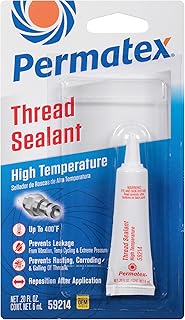
Permatex 59214 is a high-temperature thread sealant designed to seal threaded fittings while resisting leakage, vibration loosening, and exposure to moisture, hydraulic fluids, and diesel fuels. Its lubrication properties facilitate easier assembly and disassembly, reducing the risk of galling on metal threads. This product is suitable for metal-to-metal connections in automotive fuel systems where elevated operating temperatures are common. The formulation aims to maintain a flexible seal that won’t crack under thermal cycling, making it a reliable choice for engine compartments and fuel lines exposed to heat.
Key features include: locks and seals threaded fittings, resists leakage and vibration loosening, moisture resistance, and lubricates threads for easier disassembly. The high-temperature tolerance broadens its applicability for engines and heat-prone environments, though users should ensure compatibility with the specific pipe material and fuel type in their system.
RectorSeal No. 5 Pipe Thread Sealant

RectorSeal No. 5 is a non-hardening, slow-drying thread sealant formulated to lubricate and protect threaded pipe connections. It is designed to provide a soft-set seal that remains easy to break out, reducing the risk of thread damage during disassembly. The product is metal-free, which can be beneficial for sensitive or mixed-metal assemblies, and is suitable for potable water systems as a sealant that seals, lubricates, and protects threads. Its slow-drying characteristic allows for repositioning during installation, which can be advantageous for complex fittings.
Features include soft setting, long-term lubricating properties, and a composition that facilitates easy breakout without metal contamination. Although labeled as potable-water friendly, users should confirm compatibility with their specific fuel line materials and ethanol-blended fuels in automotive scenarios.
Gasoila Thread Sealant For Ethanol E10 & E85

Gasoila Thread Sealant is specifically formulated for ethanol blends such as E10 and E85, providing a secure, leak-proof seal for fuel line threads and fittings. It is non-hardening and non-toxic, remaining pliable across a wide temperature range, which makes it well-suited for engines and fuel systems that experience cold starts or temperature fluctuations. The formula is compatible with a variety of materials, including brass, copper, stainless steel, aluminum, and various pipes, ensuring broad applicability across different fuel line configurations.
Advantages include ethanol compatibility, flexibility under cold and hot conditions, and broad material compatibility. This sealant is a practical choice where ethanol-based fuels are used and where long-term pliability is important to prevent leaks and cracks in the thread seals.
Flex Seal Liquid Rubber Coating

Flex Seal Liquid is a brush-on, roll-on, or dip-on liquid rubber coating that creates a watertight, flexible seal. While primarily known for large-scale sealing projects like roofs and basements, its rubberized coating can be applied to smaller fuel line areas to seal minor gaps and protect fittings from moisture ingress and vibration. It cures to a flexible, UV-resistant film that adheres to many substrates, offering a versatile solution for temporary or supplementary sealing in vehicle maintenance contexts. It is not a traditional pipe-thread sealant but can complement other sealants by providing exterior protection and additional sealing layers where appropriate.
Key considerations include its broad application scope and the need to ensure compatibility with fuel exposure and fuel line materials. It is best used as a supplementary or preventive sealant rather than a primary thread sealant in high-pressure, high-heat fuel systems.
Permatex 85420 Permashield Fuel Resistant Gasket Dressing

Permatex 85420 Permashield is a fuel-resistant gasket dressing designed to remain flexible under high temperatures and rapid temperature changes. It provides a protective layer that helps prevent leaks in metal-to-metal gasket interfaces, enabling repeated disassembly and reassembly without compromising the seal. While not a thread sealant per se, it complements sealants by addressing gasket-oriented seals in fuel systems, reducing the likelihood of gasket extrusion or seepage under dynamic engine conditions. This product is particularly useful when combined with other thread sealants for a comprehensive sealing strategy.
Considerations include its fuel resistance, flexibility, and suitability for repeated maintenance cycles. It does not replace a dedicated thread sealant but can serve as part of a broader sealing approach in fuel system assemblies.
Buying Guide: Key Purchase Considerations For Fuel Line Sealants
- Fuel compatibility: Confirm that the sealant is formulated to withstand the specific fuels in your system, especially ethanol blends (E10, E85) common in modern vehicles.
- Temperature tolerance: Choose products rated for operating temperatures in your engine bay to prevent drying, cracking, or loss of flexibility.
- Material compatibility: Consider whether the sealant works with your pipe materials (brass, copper, stainless steel, aluminum) and with co-located gaskets or thread compounds.
- Application and cure time: Evaluate whether you need a fast-drying sealant or a soft-set option that remains workable during installation.
- Ease of removal: If future maintenance is anticipated, prefer lubricating or soft-set formulas that facilitate disassembly without thread damage.
- Non-metal content: Some systems benefit from metal-free formulas to prevent galvanic corrosion or metal contamination.
- Longevity and durability: Look for sealants designed to resist moisture, vibration, and chemical exposure over the system’s service life.
- Application method: Consider paste, paste-like thread sealant, or brush-on liquid formats based on accessibility of threads and user preference.
Additional Purchase Considerations And Use Scenarios
- Engineered fuel lines vs. general plumbing: Automotive fuel lines demand sealants that endure fuel exposure and high vibrations, whereas plumbing-focused products may emphasize potable water compatibility and non-toxicity.
- Maintenance versus replacement: For ongoing maintenance in vehicles, select products offering easy rework; for permanent installations, prioritize durable, long-lasting seals.
- Safety and handling: Follow manufacturer instructions for application, cure times, and ventilation. Some sealants emit fumes during curing; handle accordingly.