Plastic bumpers are common on modern vehicles, but cracks, gouges, and holes can appear over time. The right filler products offer a strong bond, smooth finish, and lasting performance. This article reviews five top options for repairing plastic bumpers, highlighting how they work, curing times, and ideal use cases. Whether you need a quick patch or a professional-grade seam fill, these products provide effective, durable results for American drivers.
| Product | Brand | Key Benefit |
|---|---|---|
| J-B Weld 50139 Plastic Bonder | J-B Weld Store | Fast 1:1 mix, strong bond |
| Multiplast Lightweight Body Filler | Roberlo Store | Lightweight, easy sanding |
| Flex Filler 2 | Polyvance Store | Flexible cure, easy dispensing |
| J-B Weld 8237 PlasticWeld | J-B Weld Store | Two-part epoxy putty, versatile |
| USC-77704 Garage Flexible Glaze | Chemical & Plastics | Flexible glaze for seams |
Choosing the right filler depends on the bumper material, the size of the repair, and the finish you want. The products below cover a range from quick-setting epoxy systems to flexible, sandable fillers designed for damage on plastic surfaces. Each option is suitable for vehicle maintenance, body shop touch-ups, and DIY repairs across different plastic bumper types.
J-B Weld Plastic Bonder Body Panel Adhesive
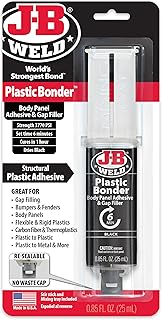
J-B Weld Plastic Bonder is a quick-set, 1:1 mixing ratio urethane adhesive system designed for strong, lasting repairs across a range of plastics and composites. It offers a tensile strength around 3770 psi and cures to a hard, permanent bond in roughly 15 minutes, with light sanding possible after about 30 minutes. This makes it suitable for repairing cracks, gaps, or seam fills on plastic bumpers. The product has a long-standing reputation for durability in professional and DIY applications.
Multiplast Lightweight Body Filler + Hardener

Multiplast is a lightweight body filler designed for easy application and smooth results on plastic and metal surfaces. The kit includes a hardener to ensure proper curing and high performance for durable repairs. Engineered with automotive-grade materials, Multiplast aims to deliver professional results with less effort, reducing sand time while maintaining a solid finish for bumper repairs.
Flex Filler 2 (Tubes)

Flex Filler 2 is formulated to remain flexible after curing, making it well-suited for repairs on flexible bumper sections or parts that experience movement. It sands quickly (about 15 minutes) and is sold in convenient squeeze tubes, eliminating the need for specialized mixing equipment. This filler is ideal when a flexible, smooth finish is required without sacrificing durability.
J-B Weld PlasticWeld Repair Epoxy Putty

PlasticWeld is a hand-mixable two-part epoxy putty designed for plastic repairs, including bumper plastics like ABS and PVC. It cures in about three hours, with a 25-minute initial set. The putty offers a lap shear strength around 600 psi and resists temperatures up to 250°F continuously (300°F intermittently). It can be molded, sanded, drilled, and cut, making it versatile for filling gouges, pinholes, and structural gaps in bumper components.
USC-77704 Garage Flexible Glaze

Garage Flexible Glaze is designed as a glaze product to bridge seams and minor irregularities on plastic bumper surfaces. It complements more rigid fillers by providing a flexible seal that adheres well to common bumper plastics. This glaze helps achieve a uniform surface before priming and painting, minimizing visible repair lines on finished bumpers.
Buying Guide: Key Purchase Considerations
- Material compatibility: Check whether the filler adheres to your bumper material (ABS, polyurethane, etc.).
- Movement and flexibility: For bumpers with flex or vibration, prefer flexible fillers to prevent cracking.
- Set time: Quick-setting formulas can reduce downtime; slower cures may allow for more shaping time.
- Strength vs. finish: Choose a product that balances structural repair with ease of sanding and finishing for a paint-ready surface.
- One-part vs. two-part systems: One-part fillers are easier but may require priming; two-part systems often yield stronger bonds.
- Temperature and cure conditions: Some fillers cure faster in warmer environments; consider garage conditions when planning repairs.
- Finish compatibility: If you plan to paint, select fillers that sand smoothly and prime well for a seamless finish.
- Tools and prep: Certain products need mixing nozzles or dispensers, while others come ready-to-use in tubes or putty.
- Durability expectations: For high-wear bumper areas, prioritize products with proven impact and weather resistance.
- Warranty and compatibility notes: Some brands provide compatibility guidelines with plastics and coatings; review these for best results.
Repair projects vary by bumper type, location of damage, and desired final appearance. The options above cover quick patches, structural fills, and flexible finishes to suit different repair scopes. When in doubt, start with a small test area to confirm adhesion and finish before proceeding with a full bumper repair.