When your vehicle’s air conditioner starts leaking, choosing a reliable sealant can save time, money, and a trip to the shop. The following hand-picked selections are designed to seal small refrigerant leaks, work with common automotive and HVAC systems, and minimize the risk of damage to components. Below you’ll find five standout products with brief highlights to help you compare at a glance.
| Product | Brand | Key Benefit |
|---|---|---|
| Aerosol A/C Leak Stop Seals, 4 Oz | — | Fast-acting aerosol seal for automotive and truck A/C systems |
| Red Angel 00222 A/C Stop Leak & Conditioner – 4.5 Ounce | BlueDevil Products Store | Guaranteed permanent seal with protection for recovery units |
| Errecom Extreme Ultra | A/C Leak Stop | ERRECOM Store | Polymer-free formula, reusable cartridge, safe with refrigerants |
| Leak Saver Direct Inject AC Leak Sealer | Leak Saver Store | Direct injection, works with most systems and refrigerants |
| Heavy Duty Nylon Universal Cable Tie Buckle | TriLnno Store | Not a sealant, but helpful for securing components during repairs |
The following sections present five detailed product profiles to help you assess application scope, compatibility, and installation considerations.
Aerosol A/C Leak Stop Seals, 4 Oz

The Aerosol A/C Leak Stop Seals provides a compact 4-ounce canister designed for automotive and light truck A/C systems. Key features include straightforward aerosol delivery for quick application, making it suitable for minor leaks where rapid sealing is required. The packaging emphasizes compatibility with common maintenance workflows, and the product is positioned for those performing DIY repairs with basic tools. Use this option when you want a fast, no-mess application that fits in standard service kits.
Red Angel 00222 A/C Stop Leak & Conditioner – 4.5 Ounce

Red Angel 00222 A/C Stop Leak & Conditioner is marketed with a guarantee of a permanent seal and protection for the A/C system and recovery unit. It emphasizes a durable seal, aiming to prevent future leaks and extend system life with conditioning additives. The product is designed for use in a wide range of automotive A/C systems, and its claims focus on sealing performance without compromising service equipment. Consider this option if you want a sealant backed by a stated guarantee and a focus on long-term system protection.
Errecom Extreme Ultra | A/C Leak Stop

Errecom Extreme Ultra offers a polymer-free formula designed to seal refrigerant leaks while protecting multiple HVAC/R components. The product is compatible with common automotive refrigerants, includes adapters for R1234yf and R134a, and promotes a five-minute vacuum test as part of the repair process. Its design emphasizes reusability and cost-saving through refills, making it a strong choice for repeat applications in shop settings or home garages that service multiple vehicles.
Leak Saver Direct Inject AC Leak Sealer
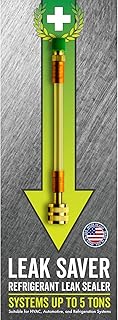
Leak Saver Direct Inject AC Leak Sealer is designed for straightforward direct injection into HVAC and automotive systems. It claims compatibility with a broad spectrum of systems and refrigerants, including R410A, R22, R134A, and newer blends. The kit-style approach avoids syringes and hoses, simplifying the repair workflow. It’s suitable for technicians and DIYers who prefer a clean, direct injection method with broad refrigerant compatibility and a preventative maintenance angle.
Heavy Duty Nylon Universal Cable Tie Buckle

While not a chemical sealant, the Heavy Duty Nylon Universal Cable Tie Buckle is included here for its practical role in repairs. Its universal design and self-locking mechanism facilitate quick, tool-free installations, keeping wires, hoses, and components secure during leak-sealing work. Durability and UV resistance make these ties suitable for both indoor and outdoor use, helping technicians organize and secure A/C components after repairs or during long-term maintenance.
Buying Guide — Key Purchase Considerations
- Leak scope and system compatibility: Choose a product formulated for automotive A/C systems and compatible with common refrigerants like R134a and R1234yf. For central or multi-system setups, prefer a versatile injector or a universal sealant.
- Application method: Aerosol versus direct injection versus cartridge-based sealants each have pros and cons. Aerosols offer quick coverage but may be less precise; direct injectors can target leaks more accurately, especially in professional workflows.
- Seal permanence: Look for products that advertise a permanent seal, and check whether they guarantee performance or include a warranty. Some options emphasize conditioning to protect the system as well.
- Safety and compatibility with components: Ensure the formula is polymer-free or non-reactive with moisture and oxygen if claimed, and assess potential interactions with TXVs, TEVs, capillary tubes, Schrader valves, and seals.
- Usability and convenience: Reusable cartridges, minimal mess, and ease of installation matter for both DIYers and professionals. Consider whether the product requires a specific manifold gauge kit or accessories.
- Long-term maintenance: If you anticipate recurring leaks, select products offering preventative benefits or multiple-use cartridges to reduce your ongoing costs.
- Component protection: Some formulas claim to protect recovery units or lubricants. Weigh these benefits if you operate a service shop or a home garage with frequent A/C work.
When evaluating A/C leak sealers, consider the leak’s size, system type, and whether you have the appropriate tools for direct injection or aerosol application. Always follow the manufacturer’s instructions and perform a pressure or vacuum test after application to verify the repair’s integrity. For ongoing issues or large leaks, professional diagnostic service may be required to prevent compressor strain or refrigerant loss.