Maintaining clean, odor-free cabin air is essential for comfort and health during every drive. This guide highlights five top cabin air filters with activated carbon, designed to reduce odors and trap pollutants while keeping HVAC systems running efficiently. Each option aligns with popular vehicle models and engine compartments, helping you pick a filter that fits your car and lifestyle. Read on for a clear comparison and practical buying guidance.
The following table presents a quick snapshot of the featured products, including their brands, compatibility focus, and standout features to help you compare at a glance.
| Product | Brand | Key Benefit | Compatibility Focus |
|---|---|---|---|
| Puroma Cabin Air Filter CP285 | Puroma Store | Activated carbon; odor reduction; durable filtration | Toyota Camry, RAV4, Highlander, Corolla, Sienna, more |
| Puroma Cabin Air Filter CP134 | Puroma Store | Activated carbon; strong contaminants capture; balanced flow | Honda & Acura models like Civic, CR-V, MDX, RDX |
| Spearhead BE-285 | Spearhead | Activated carbon; odor defense; OEM-like fit | Various mainstream vehicles |
| Spearhead BE-182 | Spearhead | Longer life; coconut carbon; strong filtration | Acura/Honda lineup; multiple recent models |
| Spearhead BE-966 | Spearhead | Long-lasting; OEM-like performance; activated carbon | GM and related models; broad compatibility |
Puroma Cabin Air Filter CP285 — Activated Carbon (OEM Fit)

The Puroma CP285 cabin air filter combines soda-woven material with activated carbon to trap odors and deliver a fresh breeze for drivers and passengers. The design emphasizes clean air inside the vehicle and offers robust protection for the cabin environment. A close-meshed, non-woven filter layer helps prevent particles from entering the cabin, contributing to engine protection and longer life for the HVAC system. This filter is positioned to optimize air conditioning and heating performance, supporting consistent airflow and climate control. Guidance suggests replacing once a year or at 12,000 miles, with more frequent changes (every 5,000 miles) advised for dirty or heavily polluted conditions.
Features and considerations:
- Activated carbon enhances odor control.
- High flow capacity supports HVAC efficiency.
- Recommended replacement intervals based on driving conditions.
Puroma Cabin Air Filter CP134 — Activated Carbon (Honda & Acura)

This Puroma CP134 filter for Honda and Acura models uses an activated carbon layer to capture odors and contaminants, delivering a clean cabin environment for both drivers and passengers. The filtration system features a close-meshed non-woven layer that helps shield the engine and HVAC components by reducing particle ingress. It also supports efficient airflow through the cabin, contributing to effective climate control. Replacement guidance mirrors the CP285, recommending annual or 12,000-mile changes, with more frequent replacements in dusty or polluted areas.
Key notes:
- Activated carbon targets odor-causing compounds.
- Engine and HVAC protection through efficient filtration.
- Standard replacement cadence with environmental considerations.
Spearhead BE-285 — Odor Defense Cabin Filter

The BE-285 is designed to defend against odors with activated carbon and aims for an OEM-like fit for a seamless installation. The filter construction emphasizes odor control while preserving the integrity of the HVAC system. Typical replacement guidance mirrors other high-quality cabin filters, emphasizing annual changes or mileage-based intervals, and especially noting frequent replacements in areas with heavy pollution or dust.
Highlights:
- Activated carbon for odor reduction.
- Long-lasting performance with a focus on fit and filtration.
- Engineered for compatibility with common vehicle lines.
Spearhead BE-182 — Longer Life, Coconut Carbon
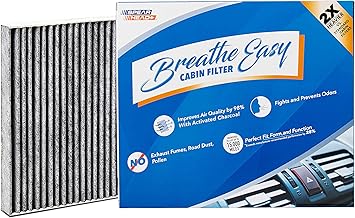
The BE-182 filter is engineered for extended life, using coconut shell activated carbon to enhance odor capture and pollutant filtration. This design aims to keep the cabin air clean for up to 15,000 miles in some vehicles, aligning with a longer lifecycle than standard filters. It fits a range of Acura and Honda models and other late-model cars, offering a balance of protection and performance for daily commuting and longer trips.
Considerations:
- Longer life with coconut carbon.
- Strong odor control for urban and rural driving.
- Compatibility with multiple Honda/Acura vehicles.
Spearhead BE-966 — OEM-Like Filter, Activated Carbon

The BE-966 is presented as a like-OEM replacement with activated carbon to help preserve cabin air quality while maintaining the performance of the original filter. Its comprehensive particle filtration supports HVAC efficiency and ensures consistent airflow. This option is suitable for a wide array of late-model GM and related vehicles, providing a practical balance of reliability and filtration power for everyday use.
Key points:
- OEM-like fit for straightforward installation.
- Activated carbon for odor and contaminant control.
- Reliable long-term performance for daily driving.
Buying Guide: Key Considerations For Cabin Air Filters With Activated Carbon
When choosing an activated carbon cabin air filter, several factors influence performance and value. Consider the following perspectives to identify the best option for your vehicle and driving environment:
- Filter media and carbon quality: Activated carbon treatment improves odor control. Look for filters that combine activated carbon with a robust base media to trap gases and particulates without restricting airflow excessively.
- Vehicle compatibility: Ensure the filter is specified for your make, model, and year. OEM-like fits typically offer easier installation and a secure seal, preserving HVAC efficiency.
- Replacement intervals: Driving in urban smog, on dirt roads, or in harsh environments may require more frequent changes. Compare manufacturer recommendations (annual or mileage-based) and adjust for your climate.
- Impact on HVAC performance: A good filter should maintain or improve airflow and heating/cooling efficiency. Be wary of filters that significantly restrict flow, which can reduce system performance.
- Lifecycle and cost: Longer-lasting filters may have a higher upfront cost but can save money over time. Balance replacement frequency with unit price and labor costs if applicable.
- Allergen and odor targeting: Activated carbon specifically addresses odors and certain gaseous pollutants. If allergies are a concern, verify the product’s efficacy claims and compatibility with your environment.
- Installation ease: Some filters require simple drawer swaps; others may involve more steps. Review installation guides or user manuals for the most straightforward option for your vehicle.
- Brand credibility and reviews: Factors such as filtration efficiency, fit accuracy, and customer satisfaction can guide your choice beyond basic features.
In sum, activated carbon cabin filters provide a tangible improvement in odor control and air quality, especially for drivers in high-pollution areas or with sensitive occupants. By weighing compatibility, replacement cadence, and filtration quality, you can choose a filter that balances performance with convenience for your daily drive.